Why subnets reshape DeFi liquidity
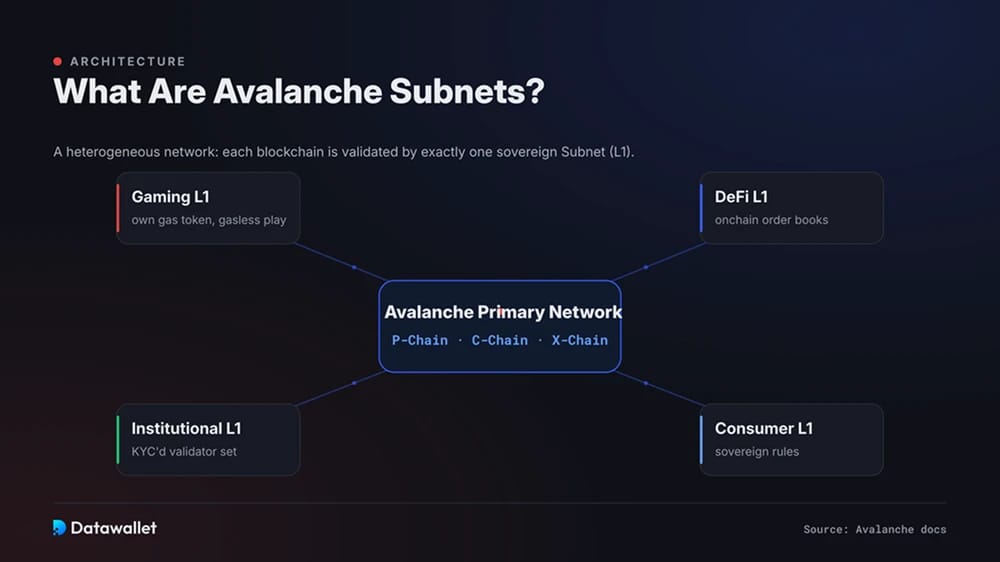
Avalanche subnets are not just another layer of abstraction; they are distinct, custom blockchains that solve the congestion problems inherent in shared chains. By allowing developers to tailor unique virtual machines, governance models, and tokenomics, subnets create isolated environments where liquidity can pool without competing for block space with unrelated applications. This isolation is critical for high-stakes financial applications that require predictable latency and deterministic finality.
In traditional shared-chain DeFi, a surge in activity from one sector—like NFT minting or meme coin trading—can congest the entire network, spiking gas fees and delaying transactions for everyone. Subnets break this shared bottleneck. Each subnet operates as its own sovereign entity, meaning liquidity within a specific subnet is dedicated to that ecosystem’s needs. This separation allows for specialized liquidity pools that are more efficient and less prone to the volatility-driven congestion seen on monolithic chains.
The result is a more robust framework for DeFi clusters. Projects can design compliance rules and consensus mechanisms that align precisely with their target users, whether that means institutional-grade security or high-throughput retail trading. This architectural shift moves DeFi away from a one-size-fits-all model toward a modular approach where liquidity is concentrated, secure, and optimized for specific financial instruments.
This divergence from monolithic design is evident in AVAX’s broader market behavior, which often reflects the health and adoption of the subnet ecosystem. As more projects launch on dedicated subnets, the correlation between subnet activity and AVAX’s utility strengthens, providing a clearer signal of ecosystem growth compared to generic chain metrics.
Top subnet-based DeFi clusters in 2026
The Avalanche ecosystem has evolved from a single chain into a modular network of specialized subnets. These clusters allow developers to tailor consensus mechanisms, virtual machines, and tokenomics to specific DeFi needs. Instead of forcing every application into a generic mold, projects can optimize for privacy, high-frequency trading, or institutional compliance.
This section highlights the most significant subnet-based DeFi clusters shaping the market in 2026. Each cluster represents a distinct architectural approach to solving scalability or regulatory challenges.
Core Subnet: The Base Layer
The Core Subnet remains the backbone of the Avalanche network, hosting the primary C-Chain and its EVM-compatible applications. It serves as the liquidity hub where most standard DeFi protocols—lending, swapping, and yield farming—operate. Its strength lies in network effects rather than novel consensus mechanics. For users, it is the default entry point, offering broad compatibility with wallets and tools like MetaMask.
DeFi Kingdoms: Gaming-Integrated Finance
DeFi Kingdoms pioneered the "play-to-earn" DeFi model by merging liquidity pools with game assets on a dedicated subnet. This cluster demonstrates how non-financial utility can drive token demand. By tying liquidity mining to in-game resource generation, it creates a closed-loop economy that reduces speculative dumping. This approach has influenced other subnets to integrate real-world utility with financial incentives.
Trader Joe DEX Lite: High-Frequency Trading
Trader Joe has expanded beyond its original DEX presence by launching specialized subnets for high-frequency trading (HFT). These subnets utilize custom virtual machines to reduce latency and increase transaction throughput beyond the mainnet limits. This allows for complex arbitrage strategies and rapid order execution that would be cost-prohibitive on the Core Subnet. It represents a shift toward infrastructure that prioritizes speed over decentralization breadth.
Institutional Subnets: Compliance-First Rails
Several new subnets are emerging with a focus on institutional compliance, featuring whitelisted addresses and regulated token standards. These clusters cater to traditional finance entities seeking blockchain exposure without regulatory ambiguity. By embedding KYC/AML checks at the protocol level, they offer a secure environment for tokenized assets. This trend signals a maturation of the Avalanche ecosystem toward institutional adoption.
Comparison of Key Metrics
The table below compares the technical and functional attributes of these primary subnet clusters. Understanding these differences is essential for evaluating risk and performance characteristics.
| Cluster | Consensus | Primary Use Case | Est. TPS |
|---|---|---|---|
| Core Subnet | Snowman | General DeFi | 4,500 |
| DeFi Kingdoms | Snowman | Gaming Finance | 4,500 |
| Trader Joe DEX Lite | Custom VM | High-Frequency Trading | 10,000+ |
| Institutional Subnets | Snowman | Regulated Assets | 4,500 |
Infrastructure requirements for builders
Deploying a subnet-based DeFi cluster on Avalanche requires more than just spinning up nodes; it demands a precise technical stack tailored to the specific consensus and virtual machine (VM) needs of your financial instruments. Unlike generic L2s, Avalanche’s modular architecture allows you to choose from multiple VMs, each optimized for different use cases. For DeFi clusters, the choice between the Platform VM (P-Chain) for governance and asset issuance, and the Exchange VM (X-Chain) for atomic asset transfers, or the Contract VM (C-Chain) for EVM-compatible smart contracts, is foundational. Most DeFi clusters leverage the C-Chain for its rich developer ecosystem but often rely on the X-Chain or P-Chain for native asset bridging and subnet management.
Cross-subnet communication (C-SCC) is the critical infrastructure layer that enables these clusters to function as a unified market rather than isolated silos. Builders must implement custom SCCs (Subnet-Contract-Contracts) to facilitate atomic swaps and data sharing between subnets. This requires a deep understanding of Avalanche’s native asset model and the specific security assumptions of each subnet. Failure to properly configure these cross-subnet calls can lead to liquidity fragmentation or, in worst-case scenarios, security vulnerabilities where assets are trapped or mispriced across the cluster. Official documentation from the Avalanche team provides the necessary specifications for implementing these SCCs securely.
For builders, the technical stack also includes robust infrastructure for monitoring subnet health, consensus latency, and cross-chain transaction finality. Tools like Avalanche’s native explorer and custom dashboards are essential for tracking the performance of your DeFi cluster in real-time. Given the high-stakes nature of DeFi, where even minor latency issues can be exploited by arbitrageurs or result in significant financial loss, infrastructure reliability is non-negotiable. Consider using provider-backed services for node infrastructure to ensure high availability and low latency, which are critical for maintaining the integrity of your cluster’s markets.
Strategic yield and risk assessment
Investing in subnet-based DeFi clusters requires a shift in how you evaluate risk. Unlike monolithic chains where liquidity is pooled, subnets fragment capital across isolated environments. This fragmentation creates unique yield opportunities but also introduces specific vulnerabilities that standard DeFi risk models often miss.
The primary concern is smart contract risk, which scales with the number of subnets. Each subnet operates its own consensus and state machine, meaning a vulnerability in one subnet’s code does not necessarily affect others, but the attack surface grows exponentially as more subnets launch. You are not just betting on a protocol; you are betting on the security posture of an entirely new blockchain infrastructure. If a subnet’s validator set is small or its codebase is immature, the risk of exploits or economic attacks increases significantly.
Liquidity fragmentation further complicates the yield landscape. When liquidity is spread thin across multiple subnets, slippage can spike during volatility, eroding potential returns. This is why understanding the depth of liquidity pools on each specific subnet is more critical than looking at aggregate ecosystem metrics. A protocol might show high TVL, but if that liquidity is siloed and inaccessible during a market crash, the yield becomes theoretical rather than real.
To navigate this, focus on subnets with established validator sets and audited codebases. Use the
to monitor the broader market sentiment, as subnet tokens often correlate with AVAX’s performance. However, always drill down into the specific subnet’s health. A high yield on a new, illiquid subnet is rarely worth the risk of a smart contract failure or a liquidity crunch.| Risk Factor | Description | Mitigation Strategy |
|---|---|---|
| Smart Contract | Vulnerabilities in subnet-specific code | Prioritize audited subnets with long uptime |
| Liquidity Fragmentation | Thin order books leading to high slippage | Check pool depth before entering large positions |
| Validator Centralization | Risk of collusion or outage in small sets | Avoid subnets with fewer than 10-20 independent validators |
The key is to treat each subnet as a distinct asset class with its own risk profile. Don’t assume that success in one subnet translates to safety in another. Diversify across subnets with different security models and validator structures to spread your exposure.
Checklist for subnet DeFi participation
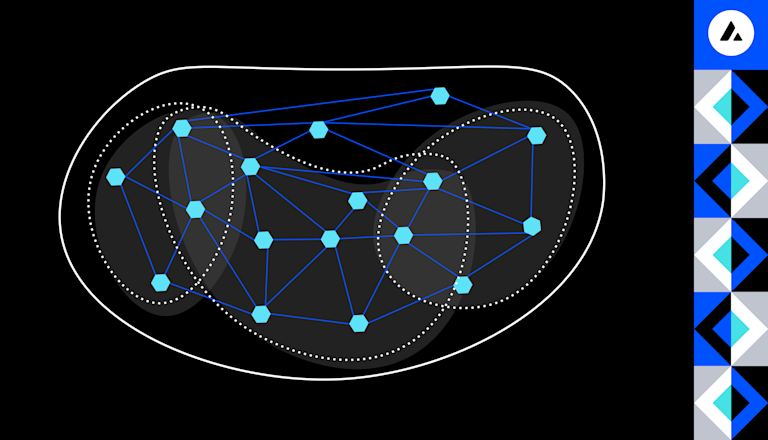
Entering subnet-based DeFi requires more than just holding AVAX. You need to verify that your infrastructure can communicate with the specific subnet’s validator set and state root. Treat this like a security audit: if the connection fails, your funds are inaccessible.
Most subnets are EVM-compatible, but you must confirm your wallet (like MetaMask or Avalanche-native options) supports the specific chain ID. Add the subnet’s RPC endpoint and Chain ID to your wallet configuration before attempting any transactions.
Subnets typically require their own native token for gas fees, not just AVAX on the C-Chain. Check the subnet’s documentation to see if it uses AVAX (wrapped) or a custom token, and bridge or transfer the necessary amount to your subnet-specific address.
Use the subnet’s dedicated block explorer to verify your balance and transaction history. When connecting to a dApp, ensure you are connected to the correct network in your wallet. Disconnect from the C-Chain or X-Chain to prevent accidental routing errors.
Always test with a small amount first. Subnet configurations can vary significantly, and a misconfigured network can lead to permanent loss of access if not corrected immediately. Refer to the official Avalanche documentation for subnet-specific RPC details.
No comments yet. Be the first to share your thoughts!