How subnet architecture enables DeFi clusters
Avalanche Subnet-Based DeFi Clusters rely on a specific architectural choice: the separation of consensus from execution. Unlike general-purpose blockchains that force every application to share the same underlying rules, Avalanche subnets allow developers to launch sovereign, customizable Layer 1 blockchains. This structure means each subnet can operate with its own validator set, economic model, and virtual machine, creating isolated environments tailored to specific financial needs.
This sovereignty is the engine behind specialized DeFi clusters. A subnet focused on real-world asset tokenization can enforce strict identity verification and compliance rules without slowing down a separate subnet dedicated to high-frequency trading or gaming. The official Avalanche documentation describes a subnet as a set of validators used to validate one or more blockchains, each with independent rules. This independence prevents the "noisy neighbor" problem common in monolithic chains, where a surge in unrelated activity can congest the entire network.
The technical foundation rests on three distinct layers: the Platform Chain (P-Chain) for coordination, the Exchange Chain (X-Chain) for asset transfer, and the Contract Chain (C-Chain) for smart contracts. Subnets connect to the P-Chain, which handles validator registration and subnet creation, while the subnet itself manages its own state and execution. This modularity allows DeFi protocols to scale horizontally. Instead of waiting for a single chain to upgrade its throughput, new subnets can be spun up to handle specific workloads, maintaining near-instant finality for each cluster.
The result is a network that behaves less like a single public square and more like a city with specialized districts. Each district has its own zoning laws, security protocols, and traffic patterns. For DeFi, this means you can build a private lending pool with institutional-grade privacy alongside a public, high-throughput exchange on the same underlying infrastructure, all while sharing the same global security umbrella provided by the primary Avalanche network.
Comparing subnet-based DeFi models
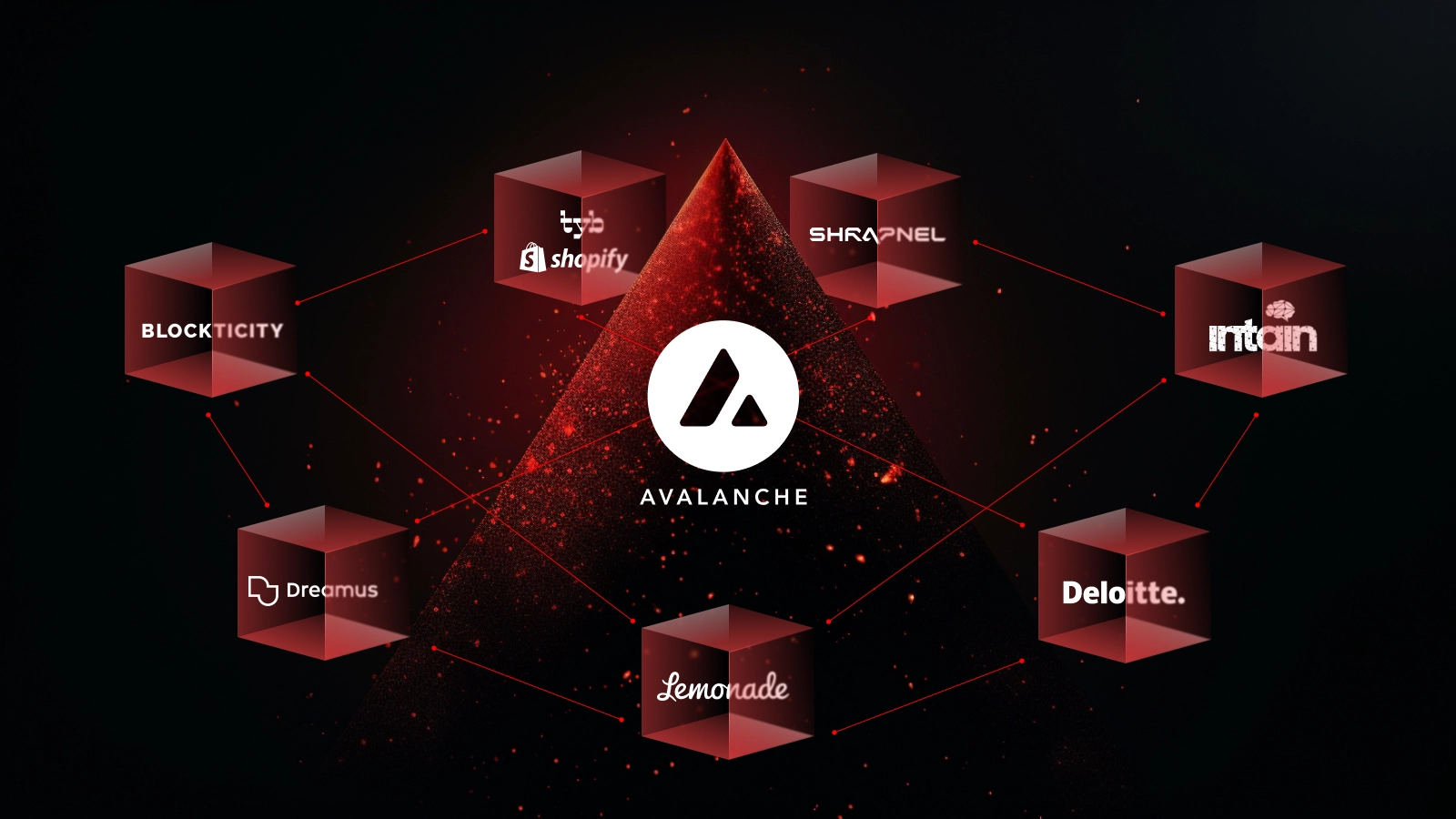
Avalanche subnets allow developers to tailor blockchain infrastructure to specific needs, creating distinct DeFi clusters that operate independently yet share the security of the primary network. This modularity means a single blockchain can host a high-speed gaming ecosystem, a regulated enterprise ledger, and a high-frequency trading venue simultaneously. Understanding the architectural differences between these models helps you select the right structure for your project.
The following comparison highlights the trade-offs between throughput, customization, and security across three common subnet implementations.
| Model | Throughput | Customization | Security Model | Target Audience |
|---|---|---|---|---|
| DEX-Focused | High (1,000+ TPS) | Low to Medium | Shared Validator Set | Traders & Exchanges |
| Gaming/Asset-Backed | Very High | High | Custom Validator Set | Game Developers |
| Enterprise/Institutional | Medium | Very High | Permissioned/Custom | Banks & Corporations |
DEX-focused subnets, such as the Dexalot subnet, prioritize transaction speed and low latency to support central limit order books. These clusters often leverage the shared validator set of the Avalanche mainnet to maintain robust security while offering the throughput necessary for high-frequency trading. This model is ideal for decentralized exchanges that require rapid order matching without the congestion of a general-purpose chain.
Gaming and asset-backed subnets typically demand higher customization to handle unique token standards, in-game economies, and user onboarding flows. By establishing a custom validator set, these projects can optimize for finality and state management specific to gaming mechanics, though they must manage their own security infrastructure. This approach separates the gaming ecosystem from unrelated DeFi noise, ensuring a smoother user experience.
Enterprise and institutional subnets focus on regulatory compliance and data privacy. These clusters often employ permissioned validator sets and custom virtual machines to meet specific legal requirements. While they may sacrifice some of the open-access throughput of public DEX subnets, they provide the control and auditability required by traditional financial institutions integrating with blockchain technology.



As an Amazon Associate, we may earn from qualifying purchases.
Infrastructure tools for subnet deployment
Building a subnet-based DeFi cluster requires more than just writing smart contracts; you need a stack that handles node management, RPC access, and cross-chain communication. The Avalanche ecosystem provides specialized infrastructure tools designed to abstract the complexity of running sovereign Layer 1s, allowing developers to focus on the DeFi logic rather than the underlying consensus mechanics.
At the core of this infrastructure is the Subnet-EVM, which allows developers to deploy custom EVM-compatible chains. However, managing the validator nodes that secure these subnets can be operationally heavy. This is where managed infrastructure providers step in. Services like QuickNode and NOWNodes offer dedicated RPC endpoints and node management tools, ensuring that your DeFi cluster maintains high throughput and near-instant finality without the downtime risks associated with self-hosted infrastructure. These tools act as the connective tissue, ensuring that your subnet remains accessible and responsive to users.
Interoperability is another critical infrastructure layer. Since DeFi clusters often need to interact with the primary Avalanche C-Chain or external ecosystems, tools that facilitate seamless token bridging and message passing are essential. The architecture relies on the native interoperability built into the Avalanche protocol, but developers must configure their subnets to recognize and trust these cross-chain communications. Proper configuration ensures that assets can move fluidly between the subnet and the broader ecosystem, maintaining the liquidity depth required for robust DeFi applications.
To contextualize the economic incentives of running or validating these subnets, it is helpful to look at the current market valuation of the native asset, AVAX. The cost of securing the network and the potential rewards for validators are directly tied to the asset's performance.
Strategic considerations for subnet adoption
Building on an Avalanche subnet isn't just a scaling choice; it's a structural one. You're trading the shared security of a Layer 1 for the autonomy of an application-specific blockchain. This decision shapes your tokenomics, governance, and how you handle interoperability with the broader ecosystem.
Customization vs. Shared Security
The primary draw of a subnet is customization. You define your virtual machine, consensus mechanism, and validator set. This allows for high throughput—Avalanche's C-chain handles roughly 4,500 TPS—but it also means you're responsible for your own security model. Unlike Layer 2 rollups that inherit Ethereum's security, a subnet's security is only as strong as its validator set. If you're building a DeFi cluster, this autonomy lets you tailor gas fees and compliance rules, but it requires careful validator recruitment.
Interoperability and Fragmentation
Subnets communicate via the Avalanche Inter-Subnet Messaging (ISM) protocol. While this enables asset and message transfer, it introduces complexity. Liquidity can fragment across multiple subnets if not managed carefully. Projects must decide whether to launch on the C-chain for immediate liquidity or on a dedicated subnet for performance, accepting the bridge risk. The goal is to create a cohesive DeFi cluster where assets flow freely, not walled gardens.
Cost and Operational Overhead
Running a subnet involves operational costs beyond gas fees. You need to manage validator nodes, which can be expensive if you opt for a permissioned set to ensure stability. However, for high-frequency trading or institutional DeFi, the lower latency and predictable fees often justify the overhead. It's a shift from "pay-per-use" to "pay-for-infrastructure."
The decision ultimately hinges on your project's maturity. Early-stage apps might benefit from the C-chain's liquidity, while established protocols with specific regulatory or performance needs should consider a dedicated subnet.
Frequently asked questions about Avalanche subnets
What is an Avalanche subnet?
A subnet is a set of validators used to secure one or more blockchains within the Avalanche network. These subnets operate with independent rules, allowing developers to tailor consensus mechanisms and virtual machines to specific needs. This architecture enables the creation of isolated DeFi clusters that don't compete for resources on the main C-Chain.
Can AVAX reach $100?
Reaching a $100 price point is possible but depends on sustained network growth, successful technology upgrades, and broader institutional adoption. While favorable regulations and cryptocurrency market expansion support this potential, investors should weigh these factors against current market volatility. Price movements are rarely linear, and subnet utility plays a significant role in long-term demand.
How do subnets impact AVAX price?
Subnets increase the utility of the AVAX token by expanding its use cases beyond simple transactions. As more enterprises and DeFi protocols deploy on custom subnets, the demand for AVAX to pay for staking and transaction fees rises. This increased utility can drive price appreciation, though it remains tied to overall market sentiment and adoption rates.
No comments yet. Be the first to share your thoughts!