Why subnets matter for DeFi clusters
The Avalanche C-Chain has long served as the network’s primary gateway for decentralized finance, but its shared infrastructure creates a bottleneck for specialized applications. When every protocol competes for the same block space and security resources, performance degrades and costs rise. This "one-size-fits-all" model forces high-frequency trading platforms, privacy-focused lending markets, and institutional-grade assets to share the same limited pipeline, often resulting in congested transactions and unpredictable gas fees.
Subnets solve this by acting as independent, sovereign blockchains within the Avalanche ecosystem. Unlike standard sidechains, they are not merely extensions of the main chain; they are distinct entities with their own virtual machines, governance rules, and tokenomics. This architecture allows developers to build subnet-based DeFi clusters tailored to specific needs. A gaming-focused subnet might prioritize speed and low fees, while a regulated finance subnet could enforce strict identity verification and compliance checks without impacting other parts of the network.
This shift from shared security to customized security models is critical for the next phase of DeFi growth. By isolating workloads, subnets enable parallel processing across the network, significantly increasing overall throughput. Protocols can now select the exact security parameters they require, balancing decentralization with performance in ways that were impossible on a single, monolithic chain.
The result is a more efficient ecosystem where DeFi applications can operate without interfering with one another. This specialization reduces friction for users and developers alike, paving the way for complex financial instruments that require high throughput and predictable execution. As the Avalanche network matures, these subnet-based DeFi clusters will likely become the standard for scalable, purpose-built financial infrastructure.
The Infrastructure Layers of a Subnet Cluster
A subnet-based DeFi cluster isn't just a single blockchain; it's a layered system where specialized components work together to handle high-frequency trading and complex financial logic. Think of the infrastructure like a factory floor: the consensus layer is the security guard, the virtual machine is the assembly line, and the subnet itself is the finished product. This separation allows developers to optimize each layer independently, creating a DeFi environment that can scale without clogging the main network.
The Consensus Backbone: Snowman
At the core of every Avalanche subnet is the Snowman consensus protocol. Unlike traditional proof-of-work systems that rely on brute force, Snowman uses a randomized voting mechanism that finalizes blocks in under two seconds. This speed is critical for DeFi clusters, where latency can mean the difference between capturing a profitable arbitrage opportunity or missing it entirely. The protocol ensures that all nodes in the subnet agree on the state of the ledger without requiring global coordination, allowing the subnet to operate as its own sovereign chain while still inheriting the security of the Avalanche Primary Network.
Virtual Machines: EVM, SVM, and Custom Logic
The virtual machine (VM) acts as the execution environment for smart contracts. Avalanche supports multiple VMs, giving subnet creators the flexibility to choose the best tool for their specific DeFi use case:
- EVM (Ethereum Virtual Machine): Ideal for projects that want to leverage the vast ecosystem of Ethereum-based tools and developers. It ensures compatibility with existing DeFi protocols and wallets.
- SVM (Subnet Virtual Machine): A newer, high-performance option designed for custom state machines. It offers greater flexibility for complex financial instruments that don't fit the standard Ethereum model.
- Custom VMs: For highly specialized DeFi clusters, developers can build their own VMs. This allows for unique tokenomics, governance rules, or compliance features that are impossible on standard chains.
Interoperability and Tokenomics
These layers are connected through the Avalanche Inter-VM Communication (IVM) protocol. This allows assets and data to move seamlessly between different subnets within the same cluster. For example, a lending protocol on one subnet can securely interact with a trading venue on another without bridging assets to an external network. This interoperability is what turns isolated blockchains into a cohesive DeFi cluster, enabling liquidity to flow freely while maintaining the security and performance benefits of dedicated infrastructure.
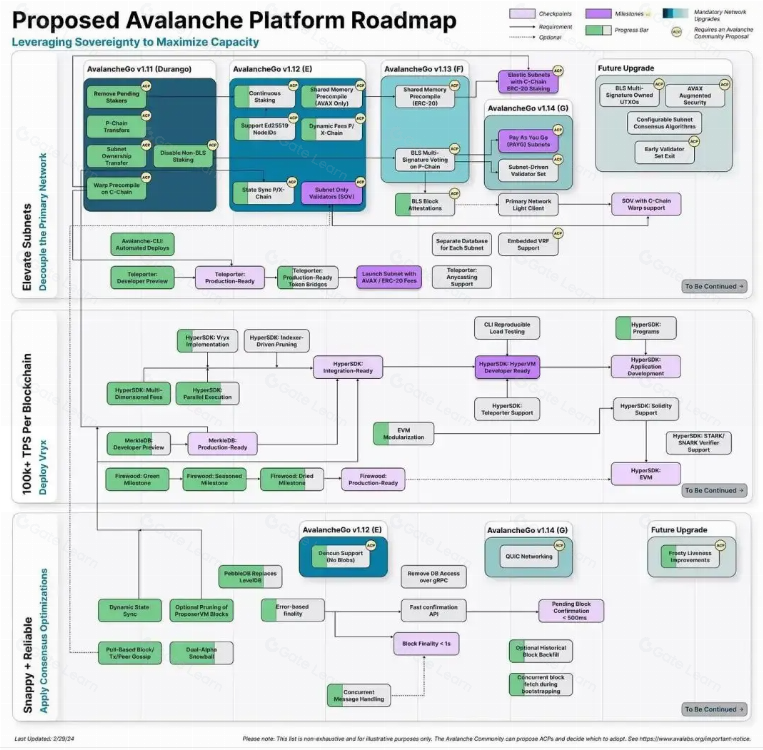
Active subnet-based DeFi clusters in 2026
The Avalanche network has moved past the experimental phase, with subnet-based DeFi clusters now forming the backbone of its ecosystem. Rather than relying on a single monolithic chain, developers and institutions are deploying specialized subnets to handle distinct workloads. This segmentation allows for tailored consensus mechanisms, custom virtual machines, and isolated security models that a general-purpose layer-1 cannot match.
Today’s active deployments fall into three primary categories: gaming and entertainment, institutional asset tokenization, and high-throughput payments. Each cluster prioritizes different performance metrics, from sub-second finality for transactions to deterministic state management for game logic.
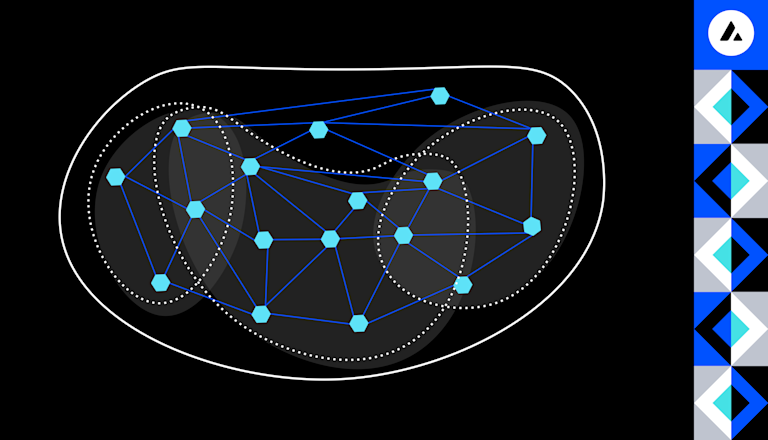
Gaming and entertainment subnets
Gaming subnets are among the most visible use cases, leveraging the Avalanche Virtual Machine (AVM) to handle complex state transitions. Because blockchain games require frequent, small transactions, these subnets often utilize Proof-of-Stake (PoS) consensus with customized parameters to minimize latency and gas fees. Projects like DeFi Kingdoms and other Web3 games have utilized these isolated environments to ensure that game logic doesn’t congest financial transactions.
The key advantage here is isolation. If a game subnet experiences a spike in activity or a smart contract vulnerability, it does not impact the core Avalanche C-Chain or other subnet-based DeFi clusters. This modularity is essential for maintaining user experience in high-frequency gaming scenarios.
Institutional and asset tokenization subnets
For institutional finance, the focus shifts from raw speed to compliance and security. These subnets often employ custom Virtual Machines (VMs) that enforce strict identity checks (KYC/AML) at the protocol level. By embedding regulatory requirements directly into the consensus layer, institutions can tokenize real-world assets (RWAs) like real estate or private equity while maintaining audit trails that satisfy traditional financial regulators.
These clusters typically use a permissioned or semi-permissioned model, allowing only vetted validators to secure the network. This approach reduces the risk of malicious actors while providing the deterministic finality required for large-value settlements. The ability to customize the VM means institutions can integrate existing legacy systems more easily than on open, permissionless chains.
Payment and high-throughput subnets
Payment-focused subnets prioritize transaction throughput and cost efficiency. By offloading micro-transactions and merchant payments to dedicated subnets, the network preserves the capacity of the primary chain for broader DeFi activities. These clusters often utilize Avalanche’s native consensus protocol, which is optimized for rapid finality, ensuring that payments are confirmed almost instantly.
This segmentation allows payment processors to scale independently. As transaction volumes grow, the subnet can be expanded with more validators without affecting the stability of the entire network. This modularity is a defining feature of subnet-based DeFi clusters, enabling the ecosystem to support diverse use cases simultaneously without performance degradation.
Comparing subnet architectures
The following table highlights the technical differences between these cluster types, focusing on the virtual machines and consensus mechanisms that define their capabilities.
| Cluster Type | Virtual Machine | Consensus | Primary Use Case |
|---|---|---|---|
| Gaming | AVM | PoS | High-frequency game logic |
| Institutional | Custom/Permissioned | PoS (Restricted) | RWA Tokenization & Compliance |
| Payments | EVM/AVM | Avalanche Consensus | Micro-transactions & Merchant Payments |
Strategic advantages for protocol builders
Subnet-based DeFi clusters solve the fundamental infrastructure bottlenecks that have historically capped DeFi growth. By moving from a shared, congested mainnet to a dedicated subnet, protocol builders gain the ability to tune their blockchain’s core parameters—consensus, virtual machine, and state management—to match their specific business needs. This architectural shift transforms the subnet from a passive ledger into a purpose-built financial engine.
The most immediate advantage is cost and speed. Shared Layer 1 networks often suffer from fee spikes during high demand, making micro-transactions or high-frequency trading economically unviable. Subnets offer scalable infrastructure that enables high-performance, low-latency transactions with consistently low fees, allowing protocols to maintain thin margins without sacrificing user experience [src-serp-7].
Beyond performance, subnets provide a framework for regulatory compliance and capital efficiency. Builders can configure access controls to meet jurisdictional requirements or implement custom tokenomics that improve capital utilization. This flexibility is critical for attracting institutional partners who require predictable transaction costs and clear governance structures. The move to a subnet-based DeFi cluster is not just a technical upgrade; it is a strategic decision to align infrastructure with long-term business viability.
Steps to deploy a subnet-based DeFi protocol
Building a subnet-based DeFi cluster requires precise infrastructure choices. Start by selecting the right Virtual Machine (VM). The EVM suits Ethereum-compatible apps, while the SVM handles high-frequency trading, and the XVM manages institutional assets [src-serp-2].
Next, configure your subnet validators. You must define the consensus mechanism and recruit validators who meet the node requirements. This step ensures your subnet maintains the security and throughput necessary for DeFi operations.
Finally, issue your token and deploy smart contracts. Link your token to the subnet’s native assets and launch your dApp. Test thoroughly before mainnet to ensure seamless integration across your subnet-based DeFi cluster.
No comments yet. Be the first to share your thoughts!