What defines a subnet-based DeFi cluster
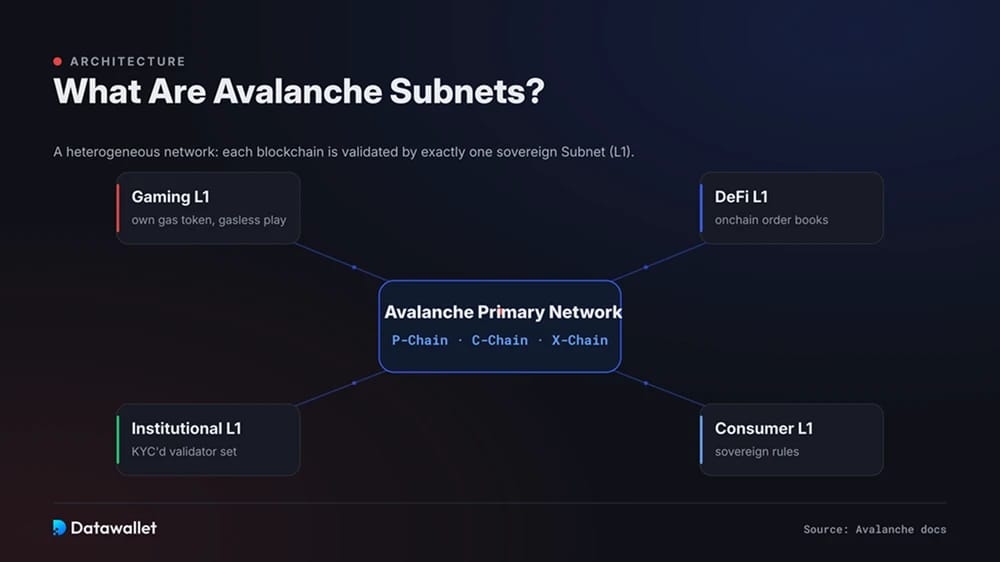
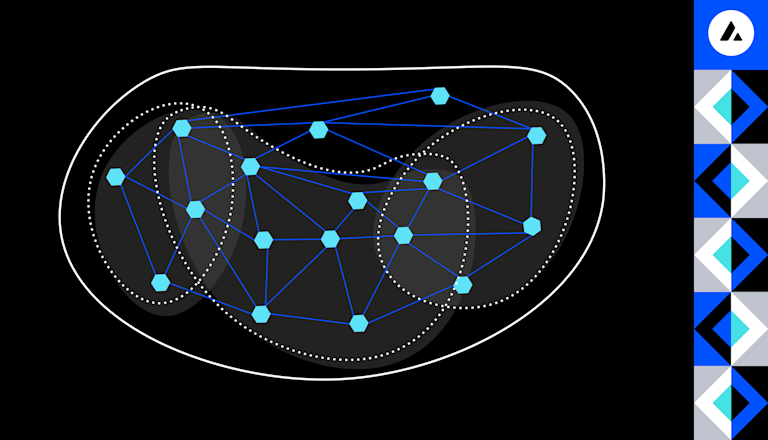
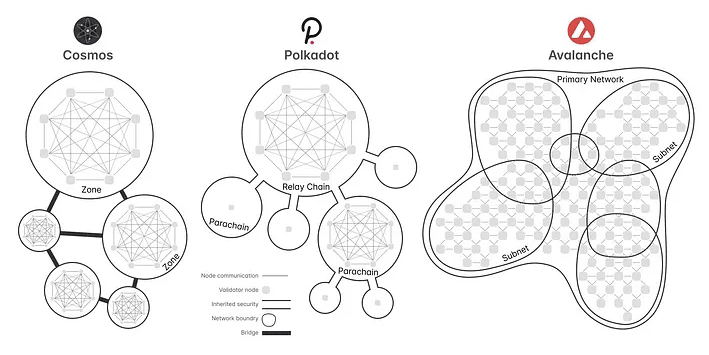
A subnet-based DeFi cluster transforms Avalanche from a single shared blockchain into a network of specialized, interconnected blockchains. In this architecture, a cluster is not just a collection of apps on the main C-Chain; it is a grouping of independent subnets that share liquidity, governance, or security models while maintaining their own execution environments. This structure allows developers to build custom virtual machines, tokenomics, and compliance rules without congesting the primary network.
The distinction matters for scalability and customization. Standard C-chain deployments compete for the same block space and gas fees, creating bottlenecks during high-volume periods. By contrast, a subnet-based DeFi cluster offloads specific use cases—such as high-frequency trading, institutional lending, or private asset management—to dedicated chains. Each subnet can be optimized for its target workload, enabling higher throughput and lower latency for its specific DeFi protocols. This modularity means that a failure or congestion in one subnet does not necessarily impact the performance of others in the cluster.
Strategically, this approach shifts the focus from monolithic scaling to architectural specialization. Projects can choose the right balance of decentralization, security, and customization for their needs. For example, a subnet might prioritize EVM compatibility for broad developer adoption, while another might use a custom virtual machine for high-performance gaming or regulated financial instruments. The result is a more resilient and efficient ecosystem where DeFi applications can scale independently while still benefiting from the shared security and interoperability of the Avalanche network.
Infrastructure options for subnet deployment
You have three main paths to launch an Avalanche subnet: self-hosting, using a managed node provider, or engaging a dedicated blockchain development agency. The choice depends entirely on how much operational overhead you want to absorb versus how much capital you want to spend upfront.
Self-hosting: Maximum control, maximum effort
Running your own validator nodes gives you total sovereignty over your subnet’s infrastructure. You configure the virtual machines, governance models, and tokenomics directly. However, this approach demands significant DevOps expertise. You are responsible for security patches, network uptime, and scaling during traffic spikes. It is the most cost-effective option long-term but carries the highest risk of technical failure if your team lacks experience.
Managed providers: Speed to market
Platforms like Chainstack and Quicknode offer managed subnet deployment services. They handle the heavy lifting of node infrastructure, allowing you to focus on smart contract logic and application development. This route is faster and more reliable for teams that need to launch quickly without building a dedicated infrastructure team. The trade-off is less granular control over the underlying hardware and slightly higher recurring costs compared to self-hosting.
Development agencies: Tailored solutions
For complex DeFi clusters requiring custom virtual machines or strict compliance rules, hiring a specialized development firm like Techfyte may be necessary. They provide end-to-end solutions, from architecture design to ongoing maintenance. This is the most expensive option but minimizes technical risk for non-technical founders or projects with highly specific regulatory requirements.
| Provider Type | Technical Control | Cost Structure | Setup Complexity |
|---|---|---|---|
| Self-Hosted | Full | Low (Hardware + Ops) | High |
| Managed Nodes | Partial | Medium (Subscription) | Low |
| Dev Agency | Managed | High (Project Fee) | Low |
The cost of infrastructure is often measured in AVAX. A live look at AVAX helps contextualize the operational budget required for validator staking and transaction fees. Keep in mind that subnet deployment costs vary based on the number of validators and the specific virtual machine chosen.


As an Amazon Associate, we may earn from qualifying purchases.
Strategic tradeoffs in subnet design
Avalanche Subnet-Based DeFi Clusters works best as a clear sequence: define the constraint, compare the realistic options, test the tradeoff, and choose the path with the fewest hidden costs. That order keeps the advice usable instead of decorative. After each step, pause long enough to check whether the recommendation still fits the reader's actual situation. If it depends on perfect timing, unusual access, or a best-case budget, include a simpler fallback.
The simplest way to use this section is to write down the real constraint first, compare each option against it, and choose the path that still works outside ideal conditions.
How subnet-based DeFi is scaling in 2026
The Avalanche subnet model is moving beyond experimental testing into distinct, vertical-specific clusters. Rather than forcing all decentralized finance activity onto a single, congested chain, developers are deploying purpose-built subnets that isolate high-frequency trading, institutional settlement, or gaming economies. This fragmentation is not a bug; it is the primary mechanism for handling enterprise-grade throughput without sacrificing the security guarantees of the primary C-Chain.
Adoption is currently driven by projects that require deterministic finality and custom virtual machines. Popular subnet-based projects like DeFi Kingdoms have demonstrated that isolating a specific game-theory economy allows for tailored tokenomics and fee structures that would otherwise bloat the main network. For developers, this means choosing between the broad liquidity of the C-Chain and the specialized efficiency of a custom subnet. The tradeoff is clear: you gain performance and control, but you must build your own liquidity bridges.
Market validation is visible in the technical metrics. While the broader crypto market fluctuates, the infrastructure demand for specialized blockchains remains resilient. The following chart illustrates the current technical setup for the underlying asset driving this ecosystem, showing how volatility impacts subnet deployment costs.
Looking ahead to 2026, the growth area lies in interoperability between these silos. The next phase of subnet adoption will likely focus on standardized cross-subnet messaging protocols that allow assets to move freely between isolated DeFi clusters. Until then, the most successful projects are those that treat their subnet as a dedicated financial district rather than just another node on a larger network.
Steps to launch your first subnet cluster
Deploying a subnet cluster requires coordinating infrastructure and governance. Use this checklist to move from concept to a live cluster.
Choose between the EVM, Coreth, or Custom VM. EVM is best for Ethereum compatibility, while Custom VMs offer maximum flexibility for specialized DeFi logic.
Provision at least three validator nodes for security. Use a cloud provider like Chainstack or Avalanche’s native tooling to spin up nodes that connect to your subnet’s C-Chain.
Write your DeFi protocols using Solidity or Rust. Deploy them to your subnet’s blockchain. Ensure your contracts interact correctly with the subnet’s custom state.
Define the native token and governance rules. Use Avalanche’s built-in governance features to manage parameter changes and allow token holders to vote on upgrades.
Before mainnet launch, deploy your cluster on Fuji. Run stress tests to ensure your validators can handle the expected transaction volume without bottlenecks.
No comments yet. Be the first to share your thoughts!