How subnet clusters change DeFi infrastructure
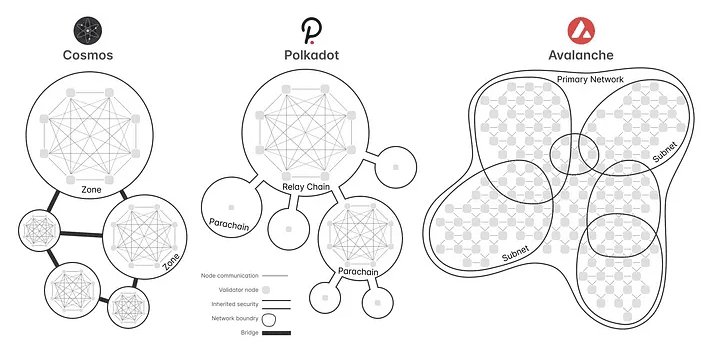
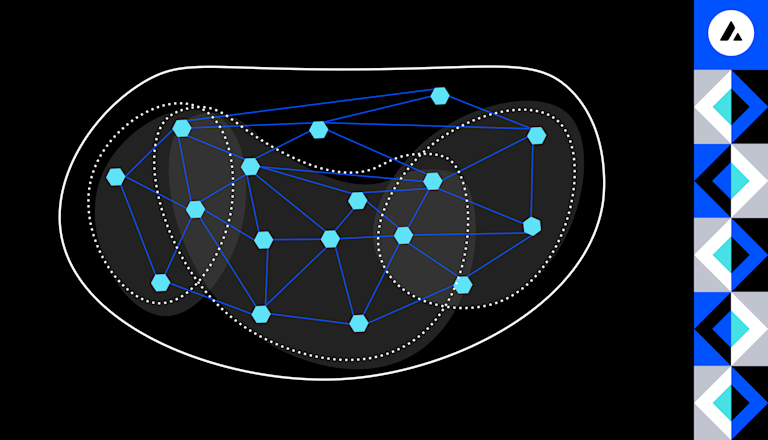
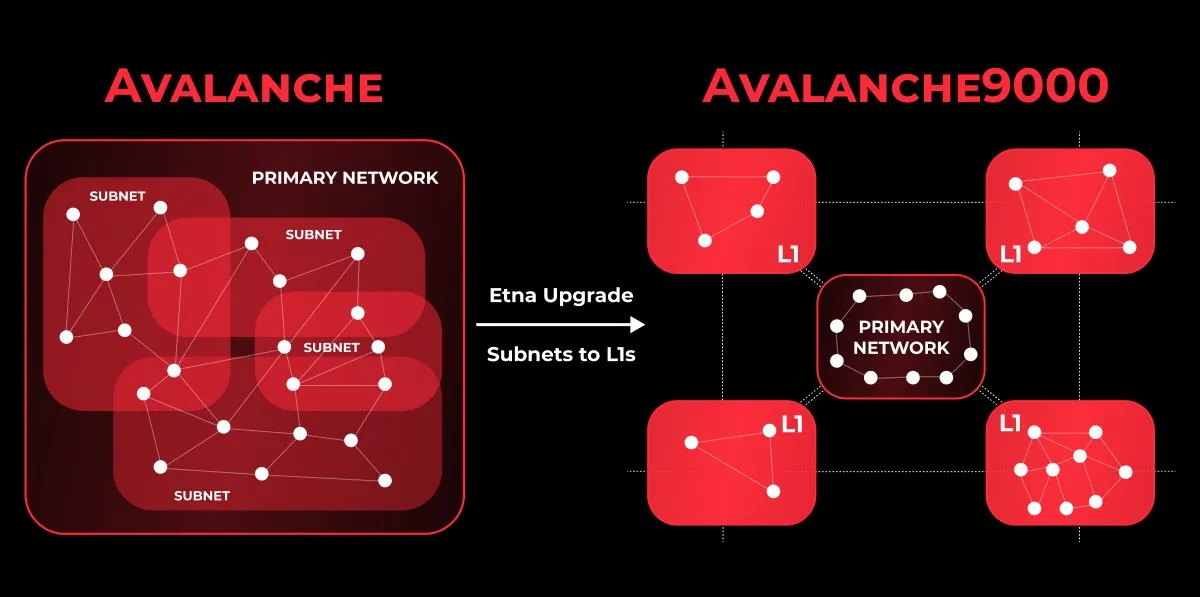
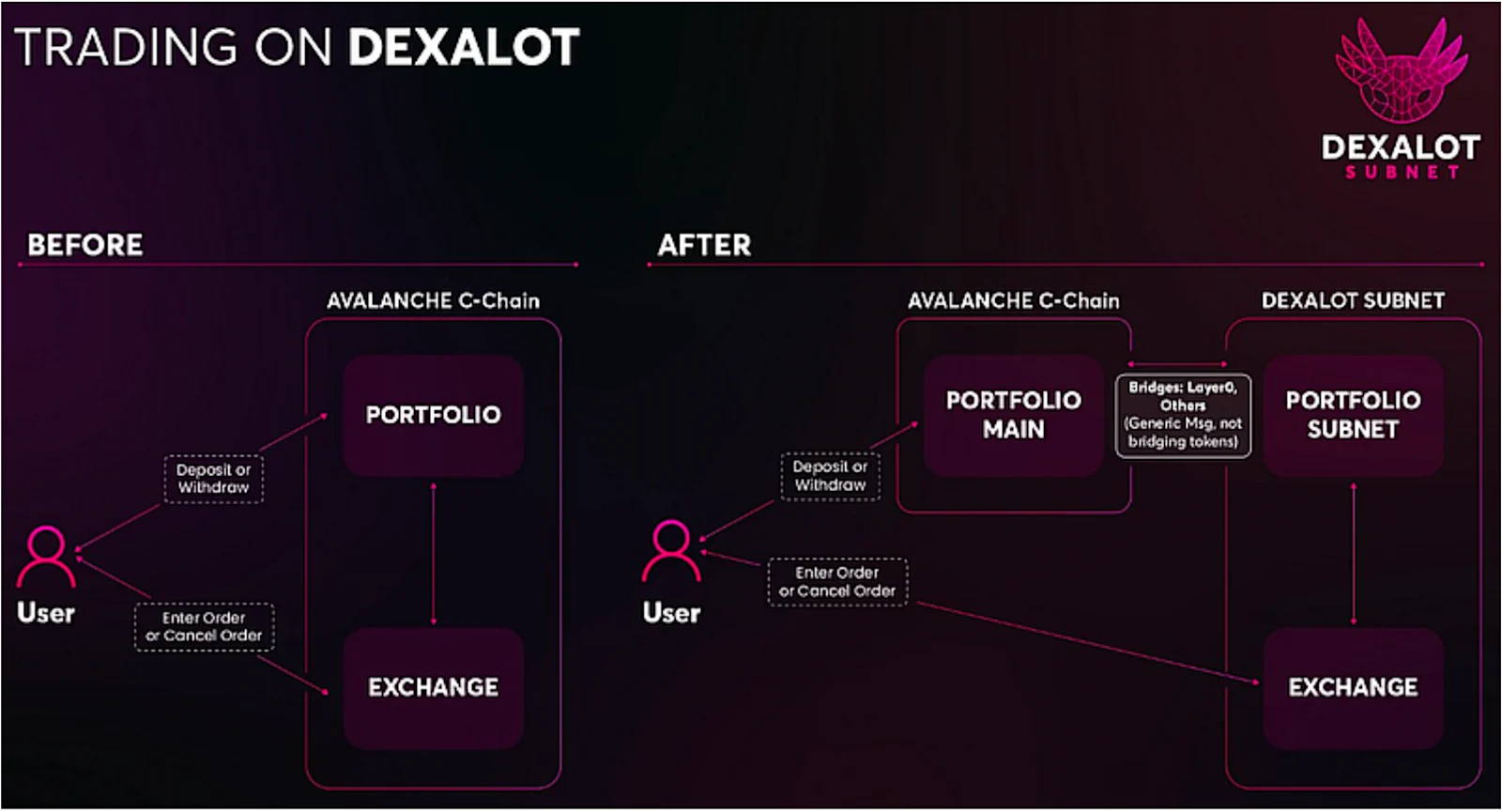
Subnet-based DeFi clusters represent a structural shift from monolithic chains to modular, purpose-built networks. Rather than forcing every application to compete for block space on a single global ledger, Avalanche allows developers to create custom blockchains that share a common security and validator infrastructure. This architecture enables institutional-grade isolation, where high-frequency trading, private asset issuance, or regulated compliance layers can operate with dedicated throughput and deterministic finality without being impacted by unrelated network congestion.
The value proposition for institutional DeFi lies in this customization. Each subnet can define its own consensus mechanism, virtual machine, and fee structure. This flexibility allows financial institutions to tailor the infrastructure to specific regulatory or performance requirements—such as implementing specific access controls or optimizing for low-latency transaction settlement—while still benefiting from the shared economic security of the Avalanche mainnet. It effectively decouples the execution layer from the security layer, creating a cluster of specialized chains that function as a unified ecosystem.
Comparing subnet architectures and use cases
Choosing the right subnet architecture is less about picking a generic blockchain and more about selecting the correct engine for your specific DeFi vertical. Avalanche’s modular design allows you to decouple consensus from execution, meaning you aren't forced to compromise on latency for security or vice versa. For institutional-grade infrastructure, this modularity is the primary differentiator between a standard L1 and a purpose-built subnet.
The core decision usually falls into three buckets: permissionless general-purpose subnets, permissioned privacy layers, and custom virtual machines (VMs) tailored for specific asset classes like Real World Assets (RWAs) or high-frequency trading (HFT). Each configuration offers distinct trade-offs in terms of validator requirements, gas efficiency, and compliance overhead.
Architecture comparison
The following table outlines the structural differences between common subnet configurations. These metrics are critical when evaluating throughput and operational costs for institutional deployments.
| Subnet Type | Latency Profile | Gas Cost | Compliance & Access | Primary Use Case |
|---|---|---|---|---|
| Permissionless General | Low (~2s) | Variable (Market-driven) | Open / Censorship-resistant | Consumer DeFi, DEXs |
| Permissioned Private | Ultra-low (<1s) | Fixed / Subsidized | KYC/Whitelist enforced | Institutional Trading, HFT |
| Custom RWA VM | Low to Medium | Optimized for Assets | Native Regulatory Hooks | Tokenized Securities, Bonds |
| Custom Gaming VM | Ultra-low | Micro-transactions | Optional / Role-based | On-chain Gaming, NFTs |
When to use permissionless vs. permissioned models
Permissionless subnets mirror the open nature of the Ethereum mainnet. They are ideal for decentralized exchanges (DEXs) or liquidity protocols where trustlessness is the product. However, they inherit the gas volatility of the broader ecosystem, which can make high-frequency strategies economically unviable due to unpredictable transaction costs.
Permissioned subnets, by contrast, restrict validator sets and often enforce identity verification. This model is standard for institutional DeFi clusters handling Real World Assets (RWAs). By limiting validator access, you reduce the attack surface and gain the ability to freeze addresses or enforce regulatory compliance natively at the consensus layer. The trade-off is a reduction in decentralization, but for regulated entities, this is often a feature, not a bug.
Custom VMs for specialized workloads
For high-frequency trading (HFT) or complex financial instruments, generic EVM compatibility may introduce unnecessary overhead. Custom Virtual Machines allow developers to rewrite the execution environment entirely. This is particularly relevant for RWA tokenization, where assets require specific state management rules that don't fit the standard ERC-20 or ERC-721 paradigms.
By building a custom RWA VM, you can embed regulatory logic directly into the block validation process. This ensures that only compliant entities can interact with certain asset classes, reducing legal risk. While this requires more development effort, it provides the infrastructure certainty that institutional investors demand.
Decision framework
If your DeFi protocol prioritizes open liquidity and broad user access, a permissionless subnet is the starting point. If your focus is on institutional capital, regulatory compliance, or ultra-low latency trading, a permissioned or custom VM architecture is necessary. The choice ultimately depends on whether your primary constraint is decentralization or performance.
Technical Performance and Market Dynamics
Subnet architecture transforms Avalanche from a general-purpose chain into a dedicated infrastructure layer for specific DeFi use cases. By isolating consensus and execution, subnets achieve throughput and finality metrics that standard Layer 1s struggle to match consistently. This separation allows protocols to optimize their virtual machines without compromising the broader network, creating a competitive advantage in high-frequency trading and institutional-grade settlements.
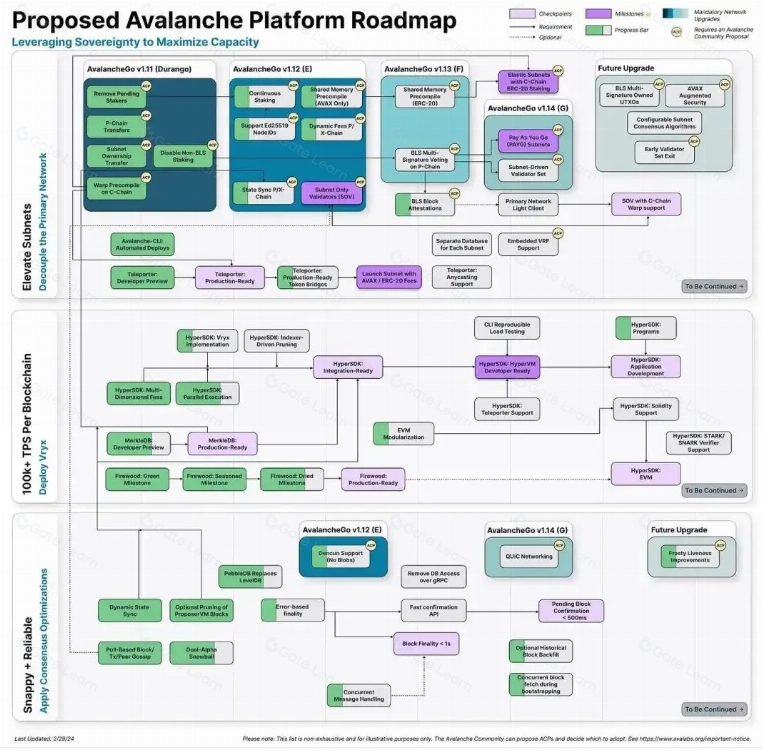
Subnets process transactions in parallel rather than sequentially. This architectural choice allows individual DeFi clusters to handle thousands of transactions per second (TPS) tailored to their specific logic, preventing the gas wars that congest general-purpose chains during market volatility.
Avalanche’s consensus mechanism delivers finality in under two seconds. For DeFi protocols, this near-instant settlement reduces counterparty risk and enables complex strategies like atomic arbitrage and real-time collateral rebalancing that require immediate state confirmation.
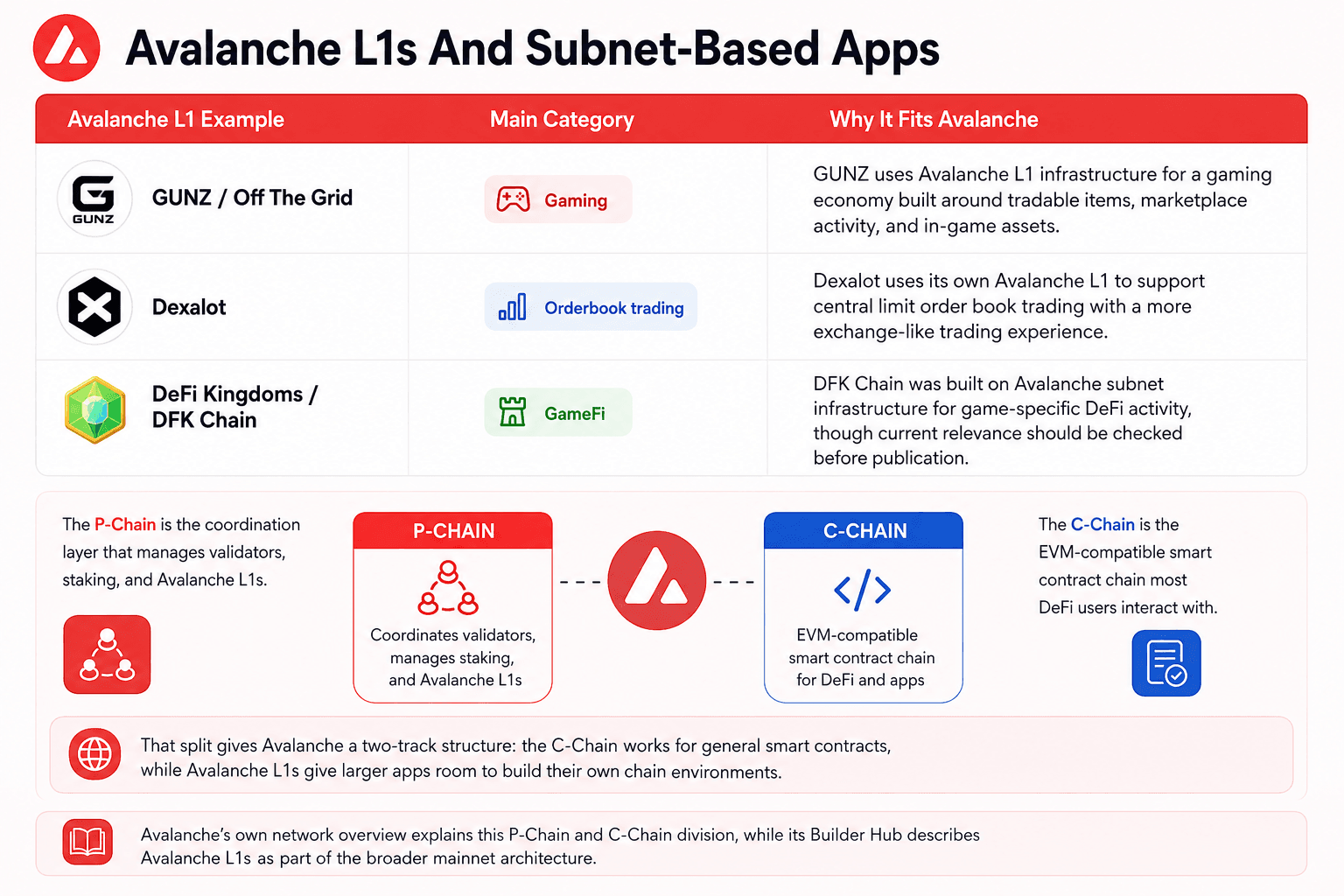
Subnet creators define their own tokenomics and security parameters. This flexibility allows institutional players to implement whitelisting, permissioned access, or custom slashing conditions, aligning the blockchain’s security model with traditional financial compliance standards.
These technical capabilities directly influence market efficiency. When transaction costs are predictable and latency is minimized, liquidity providers can operate with tighter spreads, reducing slippage for large trades. The result is a more liquid and responsive market environment, particularly for assets that require precise timing, such as derivatives and structured products.
The relationship between subnet activity and AVAX price action is visible in recent market trends. While subnet launches drive utility demand, the broader market sentiment remains tied to the asset’s performance as the native currency for subnet fees and staking.
Source: Binance
Cost structure and validator economics
Avalanche Subnet-Based DeFi Clusters works best as a clear sequence: define the constraint, compare the realistic options, test the tradeoff, and choose the path with the fewest hidden costs. That order keeps the advice usable instead of decorative. After each step, pause long enough to check whether the recommendation still fits the reader's actual situation. If it depends on perfect timing, unusual access, or a best-case budget, include a simpler fallback.
The simplest way to use this section is to write down the real constraint first, compare each option against it, and choose the path that still works outside ideal conditions.
Deploying a Subnet-Based DeFi Cluster
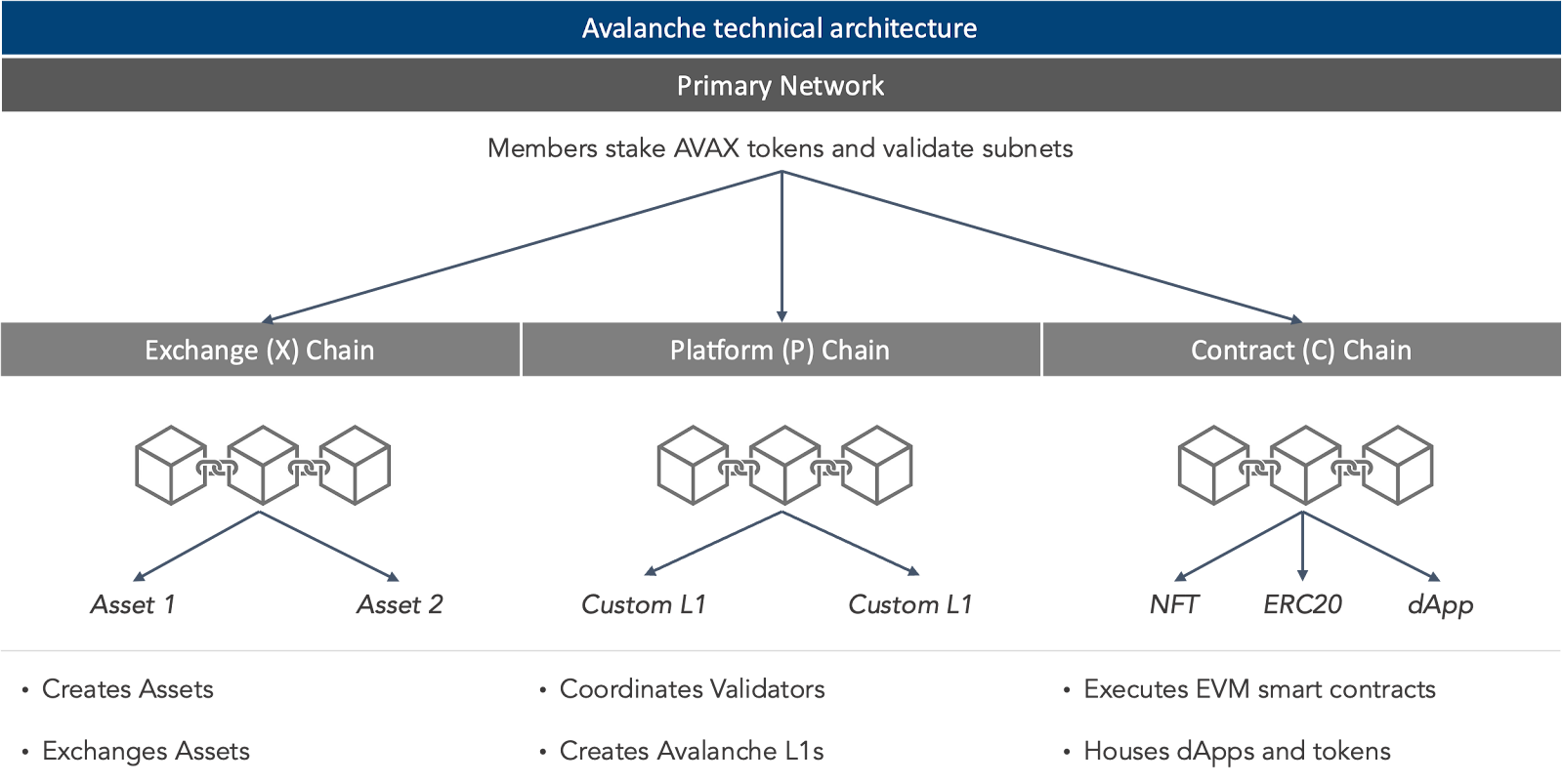
Moving from concept to a live subnet requires treating the infrastructure with the same rigor as a Layer 1 deployment. Unlike simple smart contract deployment, subnet creation involves configuring virtual machines, managing validator nodes, and establishing consensus parameters. This workflow outlines the technical prerequisites for deploying a subnet-based DeFi cluster on Avalanche.
Begin by selecting the Virtual Machine (VM) that matches your DeFi cluster’s needs. The EvmVM ensures Ethereum compatibility for existing Solidity smart contracts, while the SubnetEVM offers greater flexibility for custom state transitions. Pair this with either the Snowman consensus for high throughput or the Avalanche Consensus for faster finality, depending on your latency requirements.
Craft the genesis file to initialize your blockchain’s state. This JSON configuration defines the initial validators, the chain ID, and the pre-funded accounts for the DeFi cluster’s treasury or liquidity pools. Ensure the gas limit and block gas limit are tuned to handle the expected transaction volume of your DeFi protocols without congestion.
Provision the node infrastructure. You can run a single node for testing, but a production DeFi cluster requires a distributed set of validators to ensure security and decentralization. Install the AvalancheGo binary on each node, configure the static node IDs, and ensure secure, low-latency network connectivity between validator peers.
Use the Avalanche CLI to create the blockchain definition and export the genesis file. This step packages your VM configuration and genesis state into a format the nodes can ingest. Verify the configuration by running a test node locally to ensure the genesis block initializes correctly without errors.
Launch the AvalancheGo daemon on all validator nodes using the exported genesis file. Monitor the sync process to ensure all nodes reach the same block height. Once synchronized, the blockchain is active, and you can begin deploying your DeFi smart contracts to the new subnet.
Deploy your DeFi smart contracts to the new subnet using standard Ethereum tooling like Hardhat or Foundry, adjusting the RPC endpoint to point to your subnet’s node. Integrate your front-end and liquidity sources, ensuring they are configured to interact with the subnet’s specific chain ID and address space.
No comments yet. Be the first to share your thoughts!