Why subnets reshape DeFi liquidity
The traditional DeFi model relies on monolithic blockchains, where every transaction competes for the same block space and security budget. This congestion creates a bottleneck, forcing protocols to choose between high fees and compromised performance. Avalanche’s subnet architecture breaks this constraint by allowing developers to launch sovereign blockchains that operate in parallel.
Subnets act as specialized layers for specific financial needs. Instead of a one-size-fits-all approach, a subnet can be tuned for high-throughput trading, privacy-preserving assets, or institutional compliance. This specialization means liquidity isn’t diluted across unrelated use cases; it stays concentrated where it matters most. For builders, this translates to predictable latency and customizable fee structures that align with their economic model.
From an investor perspective, this shift redefines how value accrues. Liquidity in a subnet-based cluster is often deeper and more stable because the infrastructure is purpose-built for those assets. The underlying AVAX token serves as the security backbone, but the economic activity is distributed across these specialized environments. This structure supports the kind of institutional-grade scale that monolithic chains have struggled to achieve without sacrificing decentralization.
The market is already pricing in this structural advantage. The following chart shows the recent performance of AVAX, reflecting investor sentiment toward Avalanche’s subnet-driven growth narrative.
How Subnet Infrastructure Enables Clusters
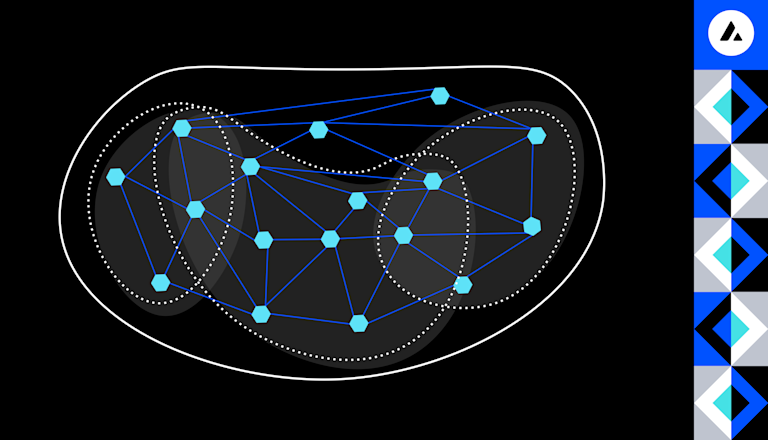
Avalanche’s architecture separates the network into two distinct layers: the Primary Network and custom Subnets. This separation is the foundation of DeFi clusters. The Primary Network serves as the global settlement layer, handling the AVAX token and the core C-Chain. It is not designed to process every type of financial transaction efficiently. Instead, it provides the security and finality that specialized clusters require.
Custom Subnets function as independent validator sets. Each subnet validates one or more custom blockchains, allowing developers to tailor the virtual machine (VM), governance models, and tokenomics to specific use cases. This means a DeFi cluster focused on high-frequency trading can operate on its own subnet without competing for block space on the main network. The subnet achieves consensus independently, ensuring that performance bottlenecks on one chain do not impact others.
This modularity allows for specialized environments. A subnet can enforce strict compliance rules for institutional assets or optimize for low-latency execution for gaming and derivatives. By isolating these workloads, Avalanche enables a cluster of blockchains that are interoperable yet distinct. They share the security of the Avalanche consensus protocol but operate with the flexibility of individual networks.
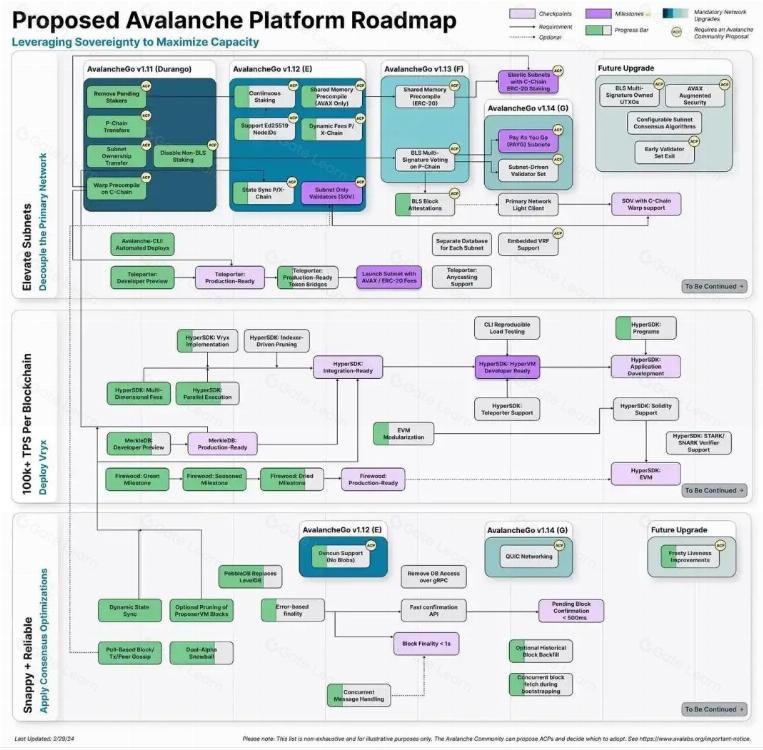
Top subnet-based DeFi clusters to watch
Avalanche’s modular design allows distinct DeFi clusters to form around specific economic models and regulatory requirements. Rather than a monolithic ecosystem, the network now hosts specialized environments for real-world assets, institutional trading, and consumer applications. Understanding these distinct clusters helps identify where capital is accumulating and which use cases are gaining traction.
Real-World Asset (RWA) Tokenization
Real-world assets represent one of the most significant opportunities for subnet-based DeFi. These clusters focus on tokenizing tangible assets like real estate, private credit, and commodities. By using dedicated subnets, projects can implement strict compliance layers and customized consensus mechanisms that meet institutional standards. This separation allows traditional finance participants to engage with DeFi protocols without compromising the security or privacy required for high-value transactions.
Institutional Trading and Privacy
Institutional trading clusters prioritize speed, privacy, and regulatory adherence. These subnets often utilize permissioned nodes or private transaction flows to protect large order books from front-running and market manipulation. The focus here is on creating a trading environment that rivals traditional exchanges in terms of latency and security, while retaining the benefits of blockchain settlement. This approach attracts high-frequency trading firms and asset managers looking for scalable, secure infrastructure.
Gaming and Consumer Applications
Gaming and consumer applications leverage subnets for high-throughput, low-latency requirements. These clusters support thousands of transactions per second, enabling seamless in-game economies and microtransactions. By isolating gaming traffic from general DeFi activity, these subnets ensure that network congestion in one sector does not impact the user experience in another. This modularity allows developers to tailor consensus and economic models specifically for interactive digital experiences.
Comparing Top Subnet Clusters
The table below highlights the key differences between these emerging DeFi clusters on Avalanche. Each cluster serves a distinct market need, from compliance-heavy RWA tokenization to high-speed consumer applications.
| Cluster Type | Primary Focus | Key Feature |
|---|---|---|
| RWA Tokenization | Tangible assets | Compliance layers |
| Institutional Trading | High-value trades | Privacy & speed |
| Gaming & Consumer | Interactive apps | High throughput |
Navigate Subnet Liquidity Risks
Avalanche’s subnet architecture allows for specialized, high-performance environments, but it introduces unique liquidity fragmentation. For investors and builders, the primary challenge is not just finding liquidity, but ensuring it remains deep enough to withstand market volatility without excessive slippage. Evaluating subnet health requires looking beyond aggregate TVL to understand where capital is actually flowing.
Start by monitoring real-time economic indicators. The native token’s performance often reflects the broader ecosystem’s confidence and liquidity depth.
When assessing specific subnets, prioritize those with transparent, on-chain data visibility. Tools that aggregate subnet TVL and transaction volumes help identify which clusters are gaining traction versus those stagnating. According to Galaxy Digital, understanding these distinct ecosystem developments is critical for accurate protocol assessment [src-serp-1].
To evaluate cross-chain interoperability and liquidity fragmentation, focus on subnets that offer clear exit ramps and robust bridge security. Avoid subnets with isolated liquidity pools that lack integration with broader DeFi primitives. As noted by GTS, explorer tools showing subnet-specific TVL dashboards are essential for spotting growing ecosystems early [src-serp-3].
For builders, the strategy is to design for composability. A subnet that operates in a vacuum limits its utility. Ensure your architecture allows seamless asset movement between the subnet and the C-Chain or EVM-compatible networks. This reduces fragmentation risk and attracts sustained capital.
Finally, keep a close watch on token emissions and vesting schedules. High inflation in a subnet’s native token can dilute liquidity providers, leading to capital flight. Prioritize subnets with sustainable tokenomics that align the incentives of validators, users, and developers.
Security and Centralization Risks
Building DeFi clusters on Avalanche subnets offers speed and customization, but it introduces distinct architectural vulnerabilities that separate them from the base Avalanche C-Chain. The primary concern is that subnets are not blockchains themselves; they are collections of validators that achieve consensus on custom chains. This distinction matters because the security model shifts from a shared, battle-tested network to a potentially isolated or under-resourced validator set.
When a subnet relies on a small group of validators, centralization risks spike. Unlike the C-Chain, which benefits from thousands of independent nodes, a subnet’s security is only as strong as its validator diversity. If a few entities control the majority of stake, the risk of collusion or single-point failure increases significantly. This is particularly dangerous for high-stakes DeFi applications where fund security is paramount.
Interoperability between subnets remains a friction point. While the Avalanche bridge allows asset movement, it is not natively seamless for all custom token standards. Liquidity fragmentation can occur if assets are locked in multiple, poorly integrated bridges. This creates liquidity silos that reduce capital efficiency and increase slippage for traders. For a subnet-based DeFi cluster to thrive, it must solve these interoperability gaps without sacrificing the speed advantages that made it attractive in the first place.
Frequently asked questions about Avalanche subnets
How do subnet fees differ from the C-Chain? Subnets operate with independent fee markets. When you transact on a custom subnet, you pay fees in that subnet’s native token, not AVAX. This isolation allows developers to optimize gas costs for specific DeFi clusters without congesting the main C-Chain.
What are the validator requirements for a subnet? Each subnet defines its own validator set. While the C-Chain requires staking AVAX, a custom subnet can require a different native token or even no staking at all for initial nodes. This flexibility enables specialized compliance or performance profiles.
Can assets move freely between subnets? Direct peer-to-peer transfers are not native to the subnet architecture. Moving assets typically requires the Avalanche Inter-Subnet Messaging (ISM) protocol or a centralized bridge. This adds complexity and potential latency compared to standard C-Chain swaps.
Do subnets inherit the C-Chain’s security? No. A subnet’s security depends entirely on its own validator set. If a subnet has few validators, it is more vulnerable to attacks than the highly distributed C-Chain. Investors should assess the validator decentralization of each specific DeFi cluster.
Why use a subnet for DeFi instead of a Layer 2? Subnets offer deeper customization, including unique virtual machines and governance rules. For high-stakes DeFi, this allows for tailored compliance, private transactions, or specialized consensus mechanisms that standard L2s cannot easily replicate.
No comments yet. Be the first to share your thoughts!